

Prof. Marnix van Gisbergen
Breda University of Applied Sciences, Netherlands
Biography: Marnix van Gisbergen (1974) is a professor ‘Digital Media Concepts’ at Breda University of Applied Sciences and professor ‘Media Enriched Sport Experiences’ (powered by ZIGGO and city of Hilversum). Between 2013-2017 Marnix was also the RBI manager of the Academy for Digital Entertainment. Presently his main research interest is aimed to help brands to realize a virtual reality strategy based on media context connectivity. With an international team of media researchers, game developers and students, Marnix is involved in several innovative media related National and European funded projects on topics such as virtual reality, human body sensors, transmedia and new media business models. In his current work at the Academy for Digital Entertainment and previous work as a lecturer/researcher at the Radboud University (1998-2006), he was involved in over 100 BA and Ma level student graduation projects. As a research director (2005-2012) of research agency DVJ Insights and youth company YoungVotes he was responsible for the initiation and management of media related research projects for over 50 (national and global) brands (e.g., RTL, MTV Networks, Sony BMG). Marnix published in numerous national and international magazines, presented at international media and communication conferences and provided workshops for companies to among others transfer research insights into new concepts. Marnix was nominated for the AMMA award for best media related research (2014), the Pfizer Press price (2010) and MOA Dutch Market Researcher of the year award (2009). In 2006 Marnix got his PhD (NWO grant) in Communication Sciences at the Radboud University.

Prof. William Hurst
Wageningen University & Research, Netherlands
Biography: Dr Hurst is an Associate Professor in Data Science and eXtended Realities in the Information Technology Group at Wageningen university. He also founded, and is head, the Social Creative Technologies Lab , which specializes in projects related to game engines, virtual, augmented and mixed reality and Data Science. To-date, he has over 100 international publications and has also been principal investigator for several grants funded by different organizations such as EU/NGI, NWO, InnovateUK, EPSRC. He also has 12 years' teaching experience covering subjects such as Data Science Concepts, eXtended Realities, Data Visualization, Digital Games Content Production, Internet and Web Technologies, and Digital Storytelling.
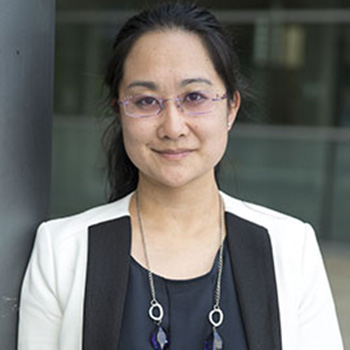
Prof. Hua Dai
California State University Channel Islands, USA
Biography: Hua Dai is a Professor of Management Information Systems at Martin V. Smith School of Business & Economics of California State University at Channel Islands, USA. Her research interests include electronic commerce, eService, big data and business analytics, blockchain and metaverse, outsourcing, IS cross-cultures, and recently, AI applications in business. Dr. Dai’s research has been published in European Journal of Information Systems, Information & Management, Decision Support Systems, The Data Base for Advances in Information Systems, Electronic Markets, ACM Transactions on Software Engineering and Methodology, Journal of Computer Information Systems, Journal of Electronic Commerce Research, among others.

Professor Dr Shuliang Li (李树良)
Fellow (lifelong) of the British Computer Society; Director and Chairman of Loxbridge High-Tech Forum, United Kingdom (https://loxbridge3i.co.uk);
Having held the posts as a Reader & Departmental Research Leader in the UK, and a distinguished & Sichuan 100 Talents professor in China
Loxbridge High-Tech Forum, United Kingdom
Experience, Education and Professional Training
Having held the posts as a Reader & Departmental Research Leader in the UK. Sichuan 100 Talents expert professor in China. Distinguished visiting professor in China.
Dr Li received his education and professional training from: Haiyang First High School (Shandong, China); Southwest
Jiaotong University (China); the University of Edinburgh (UK); the University of Bedfordshire (UK); the University of
Oxford (UK); the University of Cambridge (UK); Harvard University (USA); the University of Westminster (UK); Nvidia
(USA); Meta (USA); and ARM Cambridge (UK).
Publications
Dr Li has authored and co-authored more than one hundred refereed journal articles, research papers, books, and other scholarly items. His publications have appeared in the international journals including Decision Support Systems, European Journal of Marketing, Expert Systems with Applications, Intelligent Systems in Accounting, Finance and Management, Marketing Intelligence and Planning, Industrial Management & Data Systems, International Journal of Management and Decision Making, Mathematics, and Chinese Journal of Management Science, among others. He has also contributed numerous papers to conference proceedings published by IEEE. His research outputs have been widely downloaded and cited internationally.
Textbook Recognition
Two pages of Dr Li’s research were included in the renowned textbook Decision Support Systems and Intelligent Systems (7th edition, Prentice Hall International, 2005).
Conference leadership
Dr Li has chaired more than thirty international academic and research conferences, with proceedings published by Springer, ACM, and IEEE, and indexed by Ei Compendex, Scopus, and Google Scholar.
Research Excellence
Recognised for sustained international research excellence, Dr Li contributed to the UK Government’s Research Assessment Exercises (RAE) 2001 and 2008, and the Research Excellence Framework (REF) 2014.
Teaching and Supervision
Over the course of his academic career, Dr Li has taught and supervised more than 20,000 undergraduate, postgraduate, and doctoral (PhD) students across the UK, China, and other countries worldwide.

Dr. Yu Zhao
Tokyo University of Science, Japan
Biography: Dr. Yu Zhao is currently a Junior Associate Professor at the School of Management, Tokyo University of Science. He also serves as a Visiting Lecturer at the Institute of Statistical Mathematics, Japan. He received his Ph.D. in Information Science and Technology from Osaka University. His research focuses on both theoretical and practical aspects of statistical learning theory, operations research, and management science. His analytical approaches include machine learning and algorithmic learning methods, statistical inference and modeling, and mathematical programming. His work has been published in journals such as Omega – The International Journal of Management Science, The European Journal of Operational Research, Expert Systems with Applications, Journal of the Operational Research Society, Journal of Retailing and Consumer Services, and other reputable journals.